Theology & Bible
I am interested in theology that survives contact with real life.
Latest Theology & Bible Writing
- He Walked a Yard in Our ShoesFrom the Jordan to the wilderness and the cross: the Word made flesh, the faithfulness of God, and the High Priest who understands our humanity.
- The Paths We Keep Walking: When God Makes the Crooked Straight
 A reflection on Mark 1:3, the Greek language of beaten tracks, Joseph’s faithful walk and what it means for Christ to make our paths straight.
- The Anointed One: Walking a Yard in Their ShoesWhat the humanity of Jesus teaches us about presence, interruption, shame and the ministry of the Church.
- Real Policy Comes From Real Lives: One Year OnA blog guide to the new policy paper: visible recovery, interrupted development, care beyond medication and the practical test of Scotland’s 2026 commitments.
- The Gift of DesperationDesperation is not recovery. It is vulnerability to direction. At its deepest level, it becomes a crossroads: stay in the darkness you know, or move toward a pathway you cannot yet fully see. Modern psychology increasingly recognises that crisis and identity disruption can become moments of developmental transition. When old coping structures collapse, people are often forced into deeper questions of meaning, identity, belonging, and purpose. In addiction especially, this can create what might be described as an identity collapse cycle — where shame, maladaptive coping, fractured self-understanding, and destructive behaviours begin feeding into one another until the person no longer knows who they are beyond the chaos.
- Going Back to What You Know — When the Familiar No Longer Works
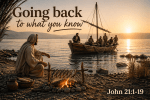 After the resurrection, the disciples knew Jesus was alive — but they didn’t yet know how to live in light of it. In that pause, they drift back to what they know. A reflection on sanctification, familiar patterns, and how real change comes not from trying harder, but from learning to listen again.
Browse the full Theology & Bible archive
Where to Begin
The Holiness of God is a good introduction to the kind of theology I am trying to write: rooted in Scripture, but asking what holiness looks like when it becomes more than a word we use in church.
Going Back to What You Know looks at the disciples after the resurrection and what their return to fishing might tell us about formation, familiar patterns and learning how to live differently.
For something more explicitly imaginative, The Bridge of Three Trees brings Eden and Calvary into conversation. Theology sometimes becomes clearer when we let an image carry some of the weight.
About My Approach to Theology
Not because theology needs to be made less serious, but because if what we believe about God cannot stand beside grief, recovery, failure, ordinary work, difficult questions and the mess of being human, then something has gone wrong somewhere.
I write here as a pastor, a student of theology and someone whose faith was formed long before I had academic language for it. Scripture matters to me. So does context. So does asking whether the way we have always explained a passage is actually what the passage is doing.
Bible, Faith and the World We Actually Live In
Some of these pieces are close readings of Scripture. Some are devotional. Some begin with a question that bothered me. Others begin with something ordinary and eventually find their way back to Jesus.
They will not always sit neatly in one theological box. I am Pentecostal by formation, but I do not think faithfulness means being frightened of questions. I would rather test an idea carefully than protect it because it sounds familiar.
And through all of it, Jesus remains the centre. Not as a convenient answer added at the end, but as the one Scripture keeps drawing me back to.


