Window Seat
I started writing these pieces because there were parts of my life I wanted to make sense of, and other parts I simply did not want to forget.
There is addiction in here. Prison. Family. Faith. Recovery. Easterhouse. Teen Challenge. Ministry. Education. Work. A fair bit of getting things wrong, and more grace than I knew what to do with at the time.
But this is not a neat before-and-after story. Life rarely is. Some pieces go back to childhood, some sit right in the middle of addiction, some look at what came afterwards, and some were written years later when I realised I understood an old moment differently.
That is probably the best way to read Window Seat too: not as a polished timeline, but as a life being looked at again from different angles.
Where to Begin
If you want to read the story from the beginning, start with The Ghost of Christmas Past. It was the first piece in the series and opens the door into the wider story.
If you want one of the moments where everything begins to turn, read Completing the Tenner. Even now, that small moment still carries far more weight than the amount of money involved.
And if you want to see where some of that story eventually led, jump forward to The Long Arc of Redemption. Nearly thirty years can sit between two doors, and sometimes only looking back lets you see what connected them.
The Story Keeps Moving
Some of the newer pieces revisit old ground. Not to rewrite what happened, but because memory, recovery and faith have a habit of showing you things you could not see the first time round.
Between the Lines – Part 1 and Between the Lines – Part 2 are part of that. Writing honestly does not mean writing everything. Sometimes maturity is knowing the difference.
Recent Window Seat Writing
- Between the Lines – Part 2
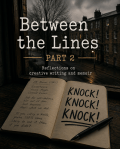 Writing honestly doesn’t mean writing everything. In Part 2 of Between the Lines, I revisit a difficult chapter of Window Seat and ask three questions: What do I need to tell you? What do I need to explain? And what am I allowed to keep for myself?
- 68 The Long Arc of Redemption
 Twenty-nine years ago, I walked through the doors of The Haven with little idea what came next. Today, I’ve returned as Head of Outreach. Somewhere between those two moments lies a long story of people, choices, faith, formation and grace — the long arc of redemption.
- Between the Lines – Part 1
 It starts small. It never stays there. Part 1 of Between the Lines.
- Why We Go Back
 Why do we return to what we already know isn’t good for us? A reflection on patterns, familiar paths, and how real change often begins not with trying harder, but with learning to walk differently.
- When Your Brain Won’t Switch Off
 Sometimes the mind refuses to switch off. The house is quiet, the lights are out, and suddenly your thoughts are holding a full staff meeting about the past, the future, and everything in between. A light reflection on why this happens — and how faith, humour, and perspective can gently quiet the noise.
- More Than The Wound
 As our language around trauma and mental health grows, so does the risk of letting wounds become identities. Naming can bring clarity and relief – but healing also requires horizon. This reflection explores how we honour the wound without being defined by it.
- Not Every Wound Needs Prodding
 In an age fluent in trauma language, this reflection considers why safety, formation, and hope sometimes matter more than prodding the wound.
- Standing Still, Looking Up
 Long before I had language for trauma or mental health, I learned how to stand still, look up, and carry on. This is a reflection on what that teaches us about healing.
- The Perpetual Elsewhere
 My phone insists I’m in London. My feet insist otherwise. A reflection on presence, place, and what it means to stay where you actually are in a world that is constantly pulling your attention elsewhere.
- I Just Killed A Man
 Bohemian Rhapsody is not a confession of murder nor an exercise in nihilism. It is a ritual execution of identity — the moment Farrokh Bulsara dies and Freddie Mercury is born. This essay reads the song as a psychological, musical, and spiritual turning point, and Mercury’s lifelong silence as an act of mercy rather than mystery.
- HOPE FUELLED, HOPE FULFILLED — LOOKING BACK FROM 2025
 In 1998, a front-page tragedy and a rough handwritten poem became the quiet heartcry that shaped the next twenty-seven years of my life. This Advent, I look back at how God took that cry from a 28-year-old former addict and opened doors into recovery work, ministry, and even academic study — from leaving school at 15 to pursuing a PhD. Hope fuelled then. Hope fulfilled now. Hope still needed — and still given.
- The Genome of Grace
 If science can recognise a flaw in our DNA, it’s only because somewhere a perfect pattern exists. Faith names that perfection not as a theory but as a person — Jesus Christ, the living design for a broken world.
Browse the full Window Seat archive


