Real Recovery
I have spent a fair bit of my life around recovery. First because I needed it myself, then because other people helped me stay in it, and for many years now because I have had the privilege of walking alongside others.
That means I am a bit wary of easy answers. Recovery is more than stopping something. It is more than getting through a programme, collecting a date, or learning the right language. It reaches into identity, relationships, belonging, purpose, faith, community and what we begin to believe might still be possible.
Some of what I write here comes from lived experience. Some comes from years of recovery work. Some comes from theology, psychology, policy and research. Most of the time they meet somewhere in the middle, because real people do not live in neat professional boxes.
Where to Begin
For the clearest short summary of how I understand recovery, start with Real Recovery – A One-Page Brief. It sets out a Christian-shaped, community-rooted view of recovery that is relational, hopeful and bigger than abstinence alone.
Not Every Struggle Is a Relapse looks at the language we use once people are in recovery, and what happens when every difficult day is treated as evidence that something is going wrong.
The Gift of Desperation pushes at another familiar phrase. Desperation can open a door, but it is not recovery in itself. What matters is where a person is able to go from there.
Recovery Is a Life, Not a Label
I am interested in what helps people build a life they do not need to escape from. That includes the wounds we carry, but it cannot end with the wound. It includes patterns and triggers, but it also includes growth, responsibility, belonging, meaning and hope.
That is why pieces such as Why We Go Back, Not Every Trigger Is a Threat and More Than the Wound sit here too. Recovery is not a separate life. It is learning how to live this one differently.
Recent Real Recovery Writing
- Real Policy Comes From Real Lives: One Year OnA blog guide to the new policy paper: visible recovery, interrupted development, care beyond medication and the practical test of Scotland’s 2026 commitments.
- 68 The Long Arc of Redemption
 Twenty-nine years ago, I walked through the doors of The Haven with little idea what came next. Today, I’ve returned as Head of Outreach. Somewhere between those two moments lies a long story of people, choices, faith, formation and grace — the long arc of redemption.
- The Gift of DesperationDesperation is not recovery. It is vulnerability to direction. At its deepest level, it becomes a crossroads: stay in the darkness you know, or move toward a pathway you cannot yet fully see. Modern psychology increasingly recognises that crisis and identity disruption can become moments of developmental transition. When old coping structures collapse, people are often forced into deeper questions of meaning, identity, belonging, and purpose. In addiction especially, this can create what might be described as an identity collapse cycle — where shame, maladaptive coping, fractured self-understanding, and destructive behaviours begin feeding into one another until the person no longer knows who they are beyond the chaos.
- The Weight of Hopelessness
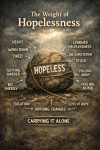 Hopelessness isn’t always loud. Sometimes it’s the quiet loss of expectation. A reflection on the weight we carry and how hope begins to return.
- Not Every Trigger Is a Threat
 Not everything that unsettles us is dangerous. A reflection on “trigger” language, growth, and learning how to respond rather than always step away.
- Not Every Struggle Is a Relapse
 Not every difficult moment is a warning sign. A reflection on how the language of relapse can shape identity, and why many struggles are part of being human — not signs of failure.
- Why We Go Back
 Why do we return to what we already know isn’t good for us? A reflection on patterns, familiar paths, and how real change often begins not with trying harder, but with learning to walk differently.
- More Than The Wound
 As our language around trauma and mental health grows, so does the risk of letting wounds become identities. Naming can bring clarity and relief – but healing also requires horizon. This reflection explores how we honour the wound without being defined by it.
- HOPE FUELLED, HOPE FULFILLED — LOOKING BACK FROM 2025
 In 1998, a front-page tragedy and a rough handwritten poem became the quiet heartcry that shaped the next twenty-seven years of my life. This Advent, I look back at how God took that cry from a 28-year-old former addict and opened doors into recovery work, ministry, and even academic study — from leaving school at 15 to pursuing a PhD. Hope fuelled then. Hope fulfilled now. Hope still needed — and still given.
- Real Recovery – A One-Page Brief
 A Christian-shaped, community-rooted overview of what real recovery looks like today — relational, holistic, hope-filled, and centred on the transforming grace of Jesus Christ. Read online or download the one-page PDF version.
- Talking Points – What Churches Can Say About Recovery Policy
 A simple set of talking points to help churches speak clearly, compassionately, and intelligently into Scotland’s recovery policy landscape — grounded in community, lived experience, and hope.
- A winter’s tale
 Follow Stuart’s poignant journey from the depths of addiction to the hope of redemption. On a Christmas marked by personal turmoil, Stuart confronts his demons and embarks on a path of transformation. This tale weaves together memories of simpler times with the stark reality of his struggles, illustrating the power of family, hope, and healing. Join Stuart as he navigates the complexities of life, rediscovering the true spirit of Christmas and the possibility of change. A story of resilience, ‘Finding Hope’ is a testament to the enduring human spirit.”
Browse the full Real Recovery archive


