Easterhouse
Easterhouse is more than the place I come from. It is the place that keeps turning up in the writing.
It is memory and family, housing and history, violence and humour, faith and community. It is the backdrop to some of the worst parts of my story and some of the best things God has allowed me to be part of since.
I do not write about Easterhouse as an outsider looking in, or as somebody trying to tidy the place into a convenient story. I write from affection, frustration, lived experience and a conviction that places are too easily reduced to statistics by people who have never had to live inside them.
Where to Begin
Stepping Back to the Land is probably the clearest place to start if you want to understand how I think about Easterhouse now. A walk through Lochwood Farm becomes a way of thinking about land, memory, ownership and what it means for a community to inherit more than buildings.
The Land of Saints and Schemers goes further back into the history beneath the streets. I have always been interested in what was here before the schemes, and what those older stories still tell us about power and place.
For the more personal side of the story, Hole in the Wall and Twos and Threes carry some of the memories that shaped how I learned to see the place from the inside.
A Place Still Being Written
I am wary of both extremes: pretending Easterhouse has no problems, or speaking about it as if the problems are the whole story.
There is poverty here. There has been addiction, violence, poor housing, bad policy and generations of people making decisions about communities they barely knew. But there is also loyalty, humour, faith, resilience, neighbourliness, creativity and people who keep showing up for one another.
That tension is probably why I keep writing about it. Easterhouse is not a case study to me. It is home.
Recent Easterhouse Writing
- HOPE FUELLED, HOPE FULFILLED — LOOKING BACK FROM 2025
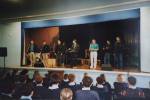 In 1998, a front-page tragedy and a rough handwritten poem became the quiet heartcry that shaped the next twenty-seven years of my life. This Advent, I look back at how God took that cry from a 28-year-old former addict and opened doors into recovery work, ministry, and even academic study — from leaving school at 15 to pursuing a PhD. Hope fuelled then. Hope fulfilled now. Hope still needed — and still given.
- Stepping back to the land
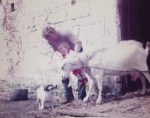 A walk through Lochwood Farm becomes a journey through history, memory, and faith. From medieval bishops to industrial tycoons, from childhood wanderings to spiritual rebirth, this is a story of land long bound by power—and the quiet hope that it might finally be shared.
- 66 Twos and threes (1989)He laughed, a laughed. That didnae happen often in thae days.
- The land of saints and schemers
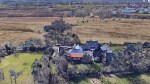 Rich children’s laughter still echoing down through the centuries. A shaft of sunlight through the trees catches my eye, glinting off the feeding trough that ensured the livestock never went without food.
- 64 – Healed people help people
 “We take broken down men with no hope…and we give them hope.”
- A single changeThe task for Writing Real Life was to think of one change you would make. One thing. And… Read more: A single change
- 63 – We are family (2020)
 “We’ve never really spoke about how I felt growing up with an addict as a brother and all the issues that came with it. “
- 60 – One moment in time (2008)
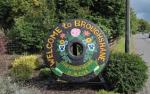 Tracy and I have seen the faithfulness of God in ways which we knew in theory, that is the Bible told us. but now we know for ourselves that so many of His promises are true.
- 59 – Ingredients (2008)
 I did it! I finally did it! Through the clouds of my mind and my own (indulgent) low self esteem in this area of my private universe, I came up with a success. Now this was not a universe shattering, Sky News Headlines sort of success, but that is all relative anyway.
- 58 Weekend at Baird Street (1986-89)
 “No matter your opinion of how cushy prisons maybe, a police station cell door clunking closed behind you, with the noise moving in waves around you, let you know you were going nowhere. Neither that day nor in life.”
- 57 – Hole in the wall (1977)“um told us to gather up our stuff (we had not been there long enough to have much). She kept anxiously switching between staring out the living room window and going through the front door to the close entrance, watching for something. If any of us asked what was wrong we would get the “nothing” reply. “
- 55 – FINALLY Understanding Education (1989)
 ” By the summer I had my own council flat, ingesting copious amounts of speed, and had nearly overdosed, on paracetamol. “
Browse the full Easterhouse archive


