
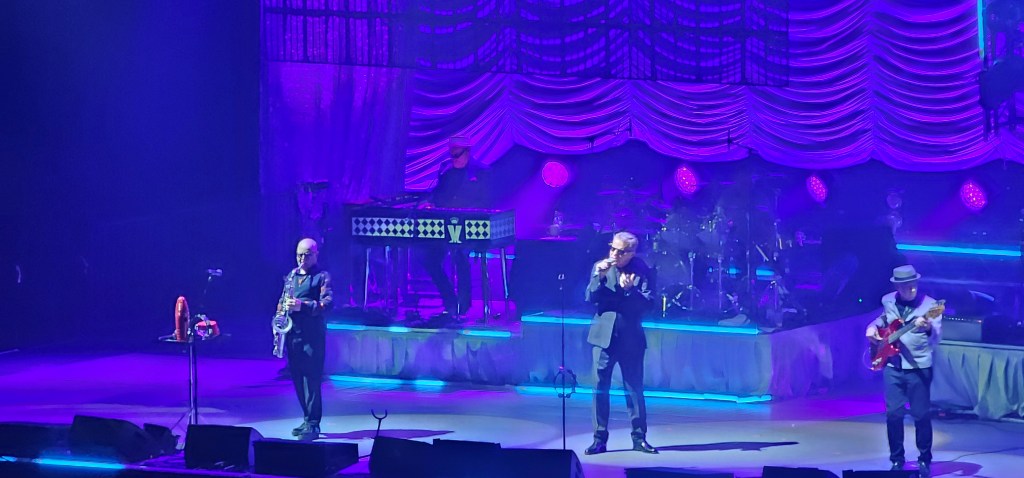
The date is circled, the anticipation is building: December 6th. That’s when I’ll be heading back to the Glasgow OVO Hydro for what will be my 6th time seeing the one and only Madness. And honestly, the excitement never fades. You just know what you’re getting: a two-hour party, and the entire arena—up to 14,000 of us—becomes one giant, bouncing, unified dancefloor.
I’ve been with different company each time—first (and second) with my wife, Tracy; then with my middle daughter, Zoe; followed by my youngest, Naomi; and once with my wee brother, Darrin. None of them were Madness fans beforehand. Every single one was by the end of the night.
Next month I’ll be there with my friend John. He’ll be a Madness devotee by the end of the concert too.
But as I was getting hyped for the gig, I was thinking about why I’ll happily go and see them again. It’s not just for the party (though the party is brilliant). It’s because, and I’ll stand by this, Madness are one of the most criminally underrated bands in British history.”
Yeah, yeah, “Our House,” “Baggy Trousers,” the goofy videos. We all know the hits, and most people file them away under “fun, nostalgic ska band”. That, right there, is the most brilliant, deceptive camouflage in pop history.
The ‘Nutty’ Camouflage: A Cover for Serious Musicianship.
The core of their magic is this: we see the “Nutty Boys” persona, but we forget to listen to what’s happening underneath.
Calling them “just a ska band” is like calling a full Scottish breakfast, “just some eggs”. They are an “almost orchestral” seven-piece unit, and the architect is Mike “Monsieur Barso” Barson. He’s a keyboardist with the melodic soul of a British music hall composer and the complex mind of a prog-rocker. His piano doesn’t just tinkle along – it’s the harmonic and rhythmic engine, full of intricate, classically-influenced arrangements.
It’s Barson who gives them their signature “happy/sad” sound by constantly using modal mixture (effortlessly swapping between major and minor chords in the same key). It’s his prog-rock sensibility that allows for the audacious, incredible key change in Our House. The verse is in C-major, but for the chorus, it jumps up a whole step to D-major. That’s a sophisticated, difficult move to make sound natural, but it’s what gives the song that incredible, joyous lift-off.
And you don’t have to take my word for it. Music theorist David Bennett Piano, in a fantastic YouTube breakdown, calls this key change ‘brilliant‘ and ‘very unusual for a pop song’. He perfectly illustrates how they use clever ‘Madness Chords’—sophisticated, non-diatonic chords—to build a ‘launch pad’ that makes this “prog-rock” move sound completely effortless and natural. It’s the ultimate proof of their technical skill hiding in plain sight.
Then you have the interplay. This isn’t just a singer and a backing band. Lee Thompson’s saxophone acts as a second vocalist, a “woodwind section” weaving complex, brilliant counter-melodies against Suggs’s vocal line. Listen to how it dances around the melody in Driving in My Car. Meanwhile, the rhythm section of Mark Bedford (bass) and Dan Woodgate (drums) is pure, tight, Motown-influenced muscle, not just a simple ska “chug”.
This “orchestra” can do joy, but it can also do atmosphere. The arrangement on Grey Day is a masterpiece of claustrophobia. The interlocking piano and sax lines create a dense, drizzly, and beautiful soundscape that perfectly matches the song’s subject: it sounds like the grey day it’s describing.
The Scholars of Ska: A Foundation of Respect
Their genius isn’t just in what they wrote; it’s in what they knew. They were deep scholars of the music that inspired them.
Their very identity is a tribute. Their first single, The Prince, was a loving, scholarly tribute to their hero, Prince Buster. This wasn’t a casual nod; their B-side was a cover of Buster’s “Madness,” the very song that gave them their name! It was their birth certificate, released on the legendary 2-Tone label, placing them at the heart of the movement.
Then there’s One Step Beyond. This wasn’t an original song; it was a cover of another Prince Buster B-side. But what they did with it is pure Madness. They supercharged it, and Chas Smash stepped up to the mic to deliver the most iconic call to arms in British pop:
“Hey you, don’t watch that
Watch this!
This is the heavy heavy monster sound
The nuttiest sound around
So if you’ve come in off the street
And you’re beginning to feel the heat
Well listen buster
You better start to move your feet
To the rockinest, rock-steady beat
Of madness
One step beyond!
It’s not just a song; it’s a mission statement, a command to the audience to join the party. It’s the sound of a band so confident in their identity that they launched their career with a tribute.
Lyrical Masters – Smuggling Kitchen-Sink Dramas into the Top 10
This is where the mask really slips. While the videos had them pulling faces, the lyrics were smuggling in profound stories about their North London, working-class upbringing. They are the true heirs to The Kinks, finding poetry in the mundane and tragedy in the upbeat.
Baggy Trousers: My favourite example. It’s not just a song about school; it’s their direct, brilliant response to Pink Floyd’s Another Brick in the Wall Part 2. Floyd’s take, from their privileged boarding school background, was bleak, grand, and oppressive. Madness’s reply, from their North London comprehensive, was, “Hold on, that’s not what our school was like”. Theirs wasn’t a gothic prison; it was a story of messy, chaotic, complicated reality, perfectly summed up in that line of pure genius:
“Oh what fun we had / But at the time it seemed so bad.”
That’s the entire truth of nostalgia in six words.
Embarrassment: This is not a happy song. This is Lee Thompson’s heartbreakingly personal story about his sister, who had a mixed-race child and was ostracized by the family. “Our aunt, she don’t wanna know she says / “What will the neighbours think…” and “Our uncle he don’t wanna know he says / ‘We’re a disgrace to the human race…” . It’s a raw, painful story of perceived family shame ad racism all summed up in the crushing line, “You’re an embarrassment.” They put this deeply personal family drama inside an irresistible, frantic pop song and took it to number 4 in the charts. That’s subversive genius.
Wings of a Dove: Just when you have them pegged as a ska band, they drop this. A joyous, defiant fusion of Calypso steel drums and the full-throated power of The Inspirational Choir of the First Born Church of the Living God, London. It’s a universal, non-denominational call for peace and spiritual uplift, smuggled into a raucous street party. It proves their musical palette was fearless and global.
It Must Be Love: And then there’s this. It’s a cover, yes, but like their Prince Buster tracks, it’s a masterful act of curation. They didn’t just cover a song; they found this beautiful, tender 1971 soul-pop classic by Labi Siffre and made it their own.
The arrangement is gorgeous, full of swelling strings and a gentle, rolling piano, proving their musicality was far broader than just 2-Tone. But the real genius is in the video. The song itself is one of the most straightforward, romantic, and sincere love songs ever recorded. And how did they present it? By being absolute lunatics. They played in a swimming pool, wore wedding dresses, and clowned around relentlessly—a perfect “Nutty Boy” camouflage, as if they were almost too shy to deliver a song with such open-hearted beauty without wrapping it in a joke.
The Sun and the Rain: This is their ultimate thesis statement. The lyrics state it plainly: “This is what life is all about / The sun and the rain.” But it’s not just a simple “mix of good and bad.” It’s about the joyous, active embrace of the paradox. The rain isn’t the “bad” part; it’s a cleansing force that “wash[es] away the weariness like tears” and makes “troubles… disappear.“
The singer finds pure joy in this, declaring, “I can say there is no better place / Than standing up in the falling down.” The music is the perfect reflection of this: the upbeat, calypso-pop sound isn’t a contradiction to the rain; it’s the sound of this celebration. It’s a sunny-sounding song about the profound joy of “walking in the rain,” and poignantly, it was the last single recorded with Mike Barson before he left the band in 1984, not to return until their massive reunion in 1992. It’s the perfect, grown-up capstone to their classic era.
The Character Sketches
They are masters of the vignette. Bed and Breakfast Man (reportedly about their original drummer) is a perfect, instantly relatable sketch of a mooching mate who’s outstayed his welcome: “He used to kip on my sofa / They used to call him a loafer“.
Shut Up is a brilliant, self-contained movie: a comically inept burglar trying to talk his way out of trouble, with the exasperated “Shut up!” being the reply from the law.
And who could forget Herbert? A two-minute, Kinks-esque masterpiece. It’s a fanatic, first-person caper about a “rotten little Herbert” trying to get with a “preacher’s daughter” while her“ prop from Burnley” father – a big fat bloke – “ is chasing me around with an old shotgun”. The music is the perfect soundtrack: not ska, but a breathless, “honky-tonk” piano-driven chase scene, with Suggs “patter-song” vocals matching the panic. It’s a hilarious, self-contained “Carry On” film in song.
The Dark Truths:
They never shied away. Michael Caine, on the surface, is a catchy tune with a celebrity name-drop. In reality, it’s a chilling, first-person narrative from a paranoid IRA informant losing his mind (“I’m living in a new name / The one I’ve got you’ve guessed… / I’m just a very worried man“).
Even House of Fun, misunderstood as a novelty song, is a nervous, brilliant vignette about a 16-year-old boy trying to buy condoms for the first time.
And this is the problem, isn’t it? Almost every song is worth talking about, and that is incredibly rare. I’ve missed a dozen classics already. I haven’t even touched on the mature, art-rock beauty of The Rise & Fall or the sheer melancholy of My Girl. We haven’t even attempted to make that Nightboat to Cairo and explore its navigation of music.
Beyond the Band
Here’s the ultimate validation, the final proof of everything we’ve been saying: the Our House musical. You simply cannot build a full-blown, Olivier Award-winning West End musical on a foundation of “silly” novelty songs.
The musical’s existence proves the “problem”: that their songs are so narratively rich. It takes their “kitchen-sink dramas” and “character sketches” and literally uses them as the script for a complex “sliding doors” story about choices, consequences, and working-class London life.
It proves that Embarrassment, My Girl, and Grey Day weren’t just pop hits; they were fully-formed, Kinks-esque dramatic scenes just waiting for a stage. The fact that their back catalogue can sustain this level of serious, long-form storytelling is the ultimate testament to their genius as songwriters.
And if you think this is just a biased fan’s opinion, let’s look at the receipts from other musicians—the “musician’s musician” factor. We don’t need a long list, because one example says it all: Elvis Costello.
This is a man who knows songwriting, and who was at the centre of the 2-Tone scene (having produced The Specials’ debut album). When Vanity Fair asked him to name his favourite Madness song, he didn’t pick an obvious hit. He chose Tomorrow’s (Just Another Day).
This is the ultimate “songwriter’s choice.” It’s one of their darkest, most mature, and musically complex songs. It’s a harrowing look at despair and regret, with verses that paint a stark picture of hitting rock bottom: “It’s down and down, there is no up / I think that I’ve run out of luck“, culminating in the devastatingly honest, “I need a moment to reflect / On the friendships I have wrecked“. The genius is in the tension between this bleak reality and the hollow optimism of the chorus, where the singer isn’t hopeful, but just reports what “I hear them saying“—that “it gets better every day“.
And the absolute proof of his deep respect for that specific song? He personally collaborated with Madness to record an alternative blues version of the track, which was released on the 12″ single. He didn’t just admire their most artful song from afar; he joined them on it.
That one action, from that artist, about that song tells you everything you need to know. It’s the ultimate validation. And while The Kinks were the “Godfathers” of Britpop, it was Madness who proved that Kinks-style, character-led, anglocentric pop could survive punk and dominate the charts, providing the direct, immediate blueprint for bands like Blur.
So yes, I’m going to the Hydro on December 6th to see the ‘Hits Parade‘ tour. I’m going to dance like a lunatic, despite my arthritic knees. I’m especially thrilled that the legendary Squeeze are supporting – a double-bill of bands who are masters of the three-minute, character-driven story.
And I’ll be thinking, as I always do, about the fascinating connections. About how Suggs, on that Glasgow stage, has his own personal link to the city through his absent Scots father—a man whose absence and story has deeply informed Suggs’s own writing and identity.
But more than anything, I’ll be there with up to 14,000 other people, celebrating a band that managed to be intelligent, musically complex, and profoundly moving, all while pretending to be seven clowns in baggy suits. That’s not just fun. That’s genius.
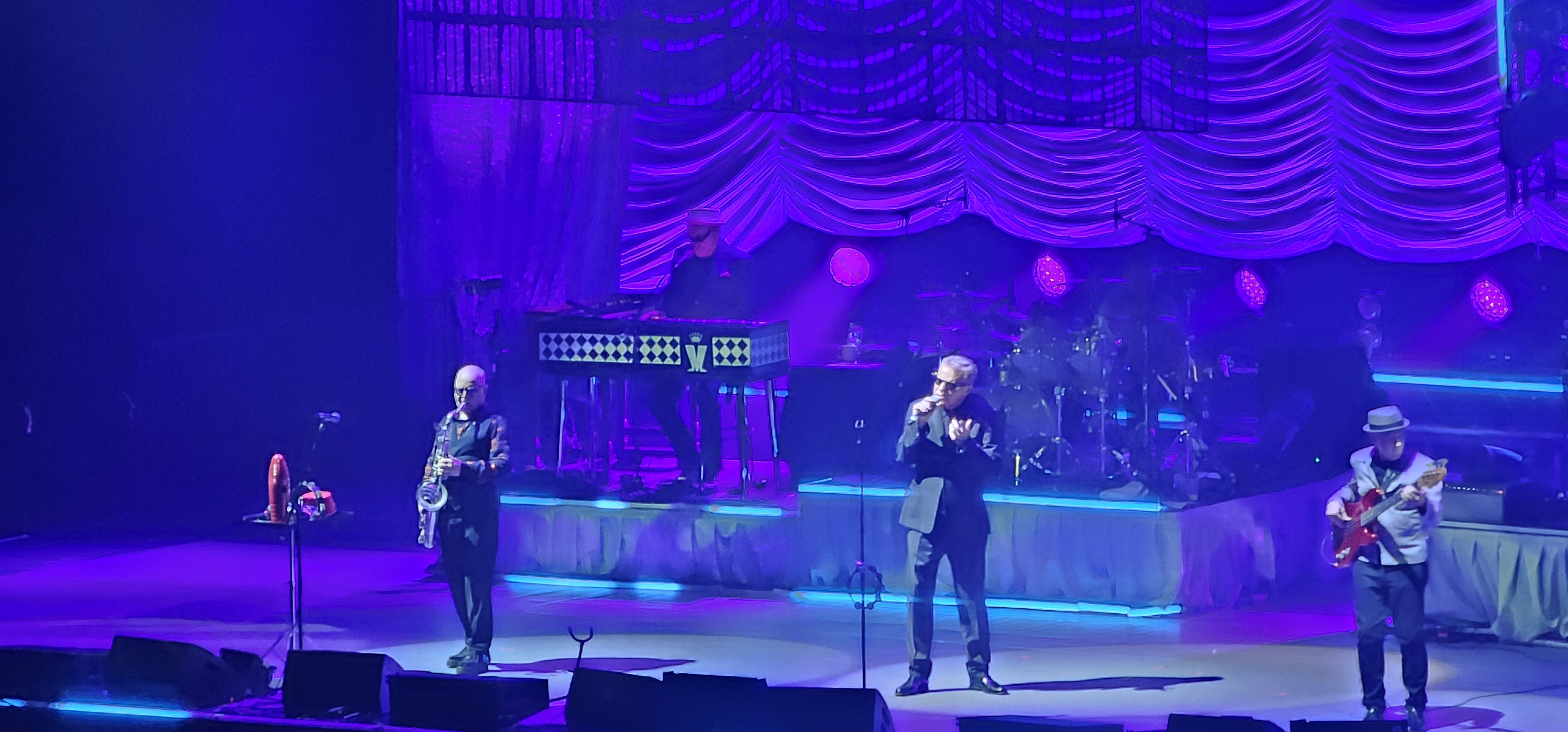
Maybe I will see you there?
Roll on December 6th.


 Window Seat
Leave a comment