
As I stand between the old whitewashed byre wall and the newer wooden fence, Lochwood Farm stretches before me – not just a smallholding, but a portal. A land swollen with history, ready to birth its secrets to any who care to see. For me, those secrets are personal as well as archaeological: grief, longing, and the ache of what might have been all gather here in the soil.
I grew up just to the west of this farm drive, in the streets of Easterhouse. My granny and granda lived down the hill in a top-floor tenement. They were friends of Jimmy and Mary Fyffe, who once farmed this land with their daughters. This ground feels known. Generational. A kind of sacred local.
Many pass by Lochwood Farm without a second glance, eyes fixed on Drumpellier Park or the curated beauty of the Seven Lochs Wetlands. They miss the hidden depth here – the ghosts, the layers, the longings. But as I walk the entranceway, I feel them. The past climbs up through the soles of my feet.
That rusted, ornate gate half-hidden behind a modern caravan hints at the grandeur that once was. Lochwood House, built by the iron-rich Bairds of Gartsherrie in 1820, reigned here. You can still trace the scarred outlines of its gardens on Google Earth. One family’s opulence spread over what would later cram sixty thousand working-class lives into red sandstone flats and concrete schemes. Rich children once laughed on these lawns while generations of locals toiled and struggled within sight of them.
Birdsong filters through the trees, seemingly conspiring in the illusion that this land always served the many. But it didn’t. Not really. Not then. Not now.
Walking further takes me back further – to the 12th century, when this land was gifted the lofty title of bishopric. The Bishop of Glasgow built a holiday home here, legend has it, reached by gondola down the Molendinar Burn. A short journey from the Cathedral, but a far cry from the Galilean carpenter he claimed to represent.
The land has long been a canvas for power – castles, stately homes, psychiatric hospitals. Gartloch Hospital, in all its Gothic menace, loomed over my childhood like something from a Bram Stoker novel. We were warned: misbehave and you’ll be dragged there. The towers pierced the fog; the stories pierced our imagination. Madness, mystery, and maybe even monsters. Later, it became luxury flats.
But the shadows remain. Longer than any building. Deeper than any loch.
At the Easterhouse end, history surprises me again. In 1898, the loch gave up its secret – a crannog, a man-made island settlement from over 700 years before Christ. Long before bishops and barons, families lived here, worshipped here, built lives on these same soils. That matters to me. It says this land was always more than battlefields and baronial titles. It was home.
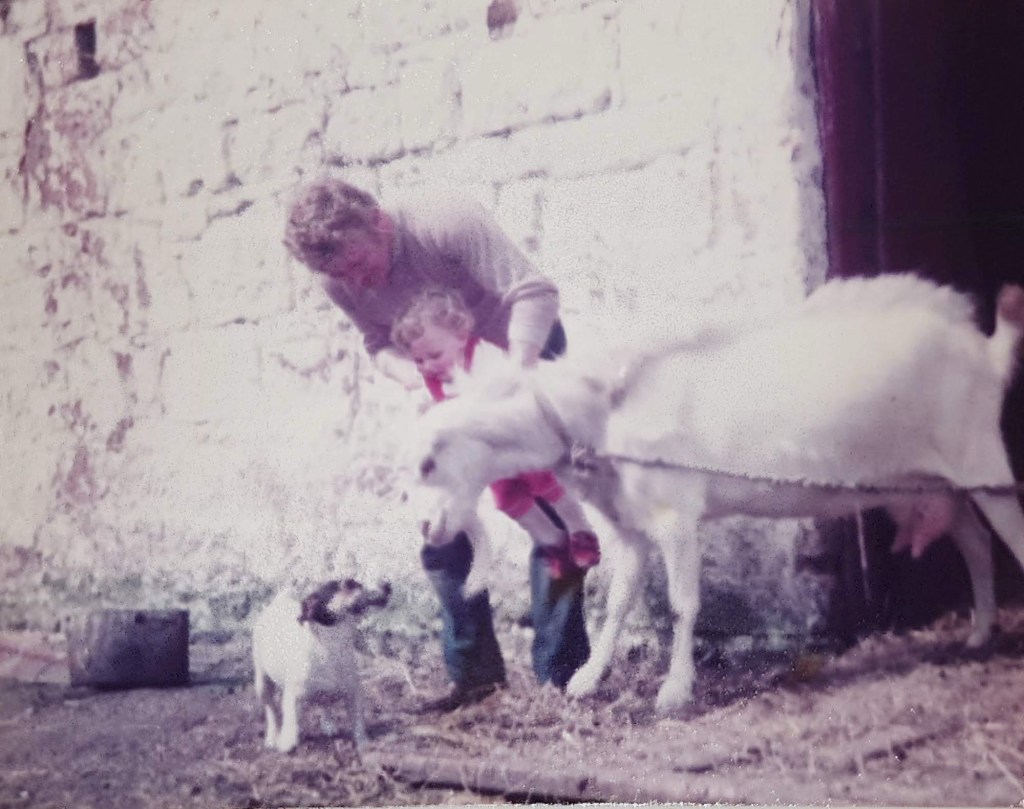
My own memories are cradled in these paths. In the 1980s, my granda took me walking here. He introduced me to Jimmy Fyffe before I’d even fully drawn breath. Jimmy taught me how to muck out the byre, gather eggs, and lead the cattle back from across the loch. It was a different kind of inheritance. A glimpse of what life could be like if generosity, not greed, ruled the land.
But then came addiction. My intimacy with the land gave way to intimacy with drugs. Even when Jesus broke into my life with hope and healing, I came back to these paths carrying both wonder and lament. I saw again how the bishops taxed the poor for their gondolas. How industrial barons profited off the backs of others. And how now, even beauty is managed and marketed.
One Sunday, not far from where Lochwood House once stood, I finished preaching and was chatting with folk in the church hall. A soft voice called out, “Hi, I’m Paul, and this is my wife Christine.”
They had just bought Lochwood Farm, rescuing it from the same decline that had swallowed its castle and mansion. Their dream was simple and radical: to open the land. Not just a caravan park or heritage site, but a house of prayer. A place of rest. A place where ghosts might finally stop pacing.
That day, as I walked back out to the car, the air tasted different. Sweeter. Truer. The trees whispered again, not of sorrow, but of hope.
This land, long bound by privilege and power, might finally be held by hands willing to share it. And in that sharing, maybe even the shadows can find peace.
I stood there for a long time that day, between the old byre wall and the wooden fence, feeling something settle inside me. Not resolution — not yet — but recognition. A sense that the land remembered me, even after all the ways I’d tried to outrun myself.
Places have a way of keeping the truth. They hold what we lose and wait for us to come back for it. Lochwood was that for me: a place that never forgot.
As I turned to leave, a breeze moved through the trees with that strange familiar sound — half-whisper, half-welcome. The same sound I heard as a boy walking beside my granda. The same sound I heard years later when my life cracked open and grace slipped through the gap.
And for the first time in a long while, I didn’t hear accusation or nostalgia.
I heard invitation.
An invitation to step back, to listen again, to let the land speak — not just of who I was, but of who I might still become.
Sometimes healing begins not in a church service or a recovery group or a well-planned programme, but in a field where your childhood and your future finally stop walking in opposite directions.
Sometimes God brings you back to the land so He can bring you back to yourself.
And as I walked the path back to the car, the sun broke through the cloud cover, just for a moment, lighting the farm in a way I’d never seen before.
Maybe it was only the weather.
Maybe it was something more.
Either way, it felt like a beginning.
If this piece resonated, you might also appreciate:
- Walking the Long Road Back – reflections on place, memory, and redemption
- 67 Slipped Gear – a story of loss, recovery, and unexpected grace
- Window Seat Memoir Series – my journey from addiction to hope
👉 Full series: https://stuartpatterson.blog/category/window-seat-memoir/
If you’d like updates on new essays, creative pieces, and ongoing recovery/theology work, you can subscribe to the mailing list on the homepage.
Thanks for reading — and for walking a little of this old land with me.

 Window Seat
Leave a comment